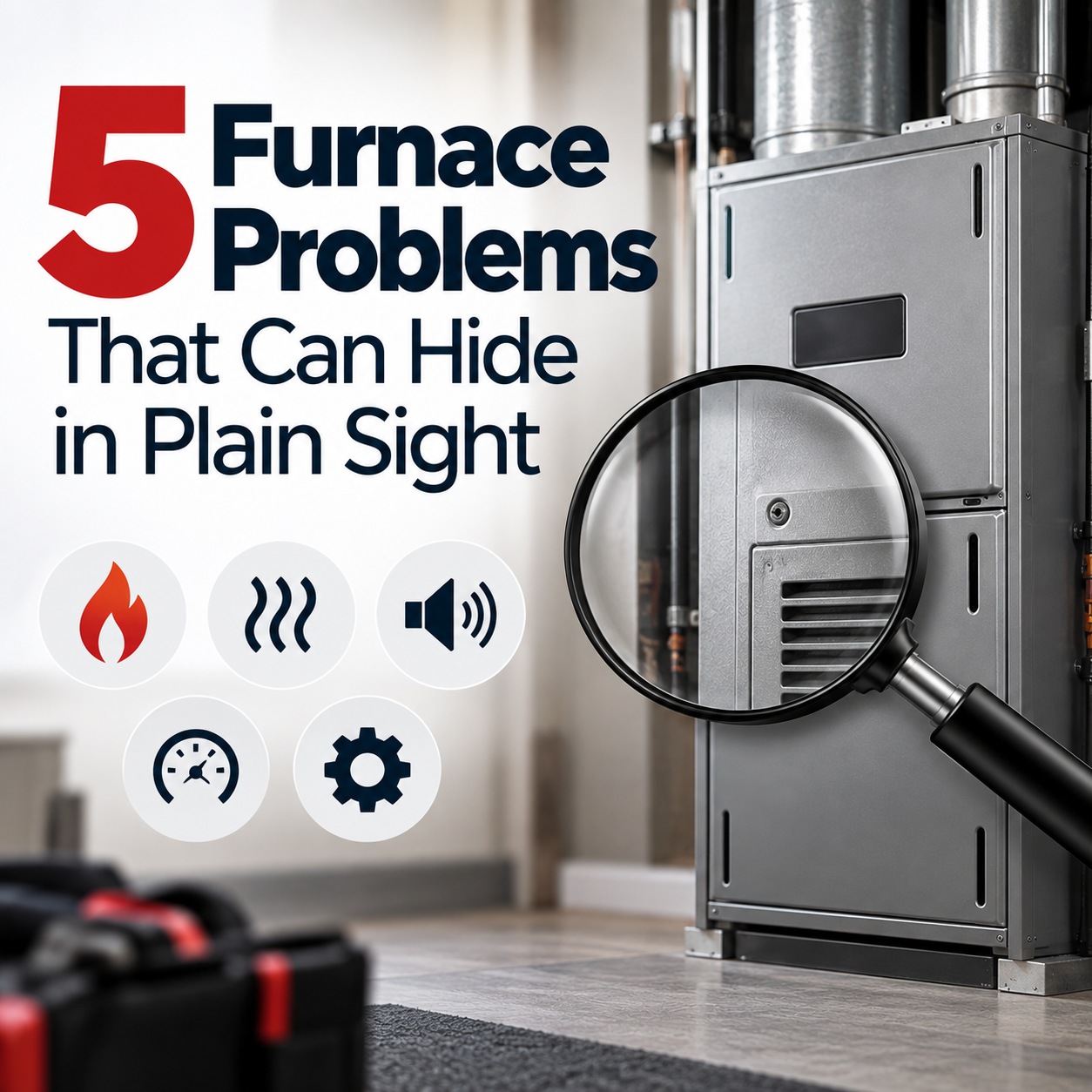
A furnace rarely breaks down without warning. From short cycling to a flickering flame, these five easy-to-miss signs reveal when your furnace is struggling before it fails completely.
As February winds down, the promise of spring is in the air. But while you’re dreaming of
open windows and greener lawns, your HVAC system is likely feeling the fatigue of a long
Canadian winter.
Most homeowners only think about their HVAC when the air stops flowing. However, the
"shoulder season", that transition between freezing nights and mild afternoons, is actually
the most critical time for maintenance.
Winter places heavy demand on furnaces across Ontario. When temperatures drop, heating systems often run for long hours, making even minor issues turn into major problems. Many winter furnace failures don’t happen suddenly they develop slowly and go unnoticed until the system stop working during extreme cold.
Ontario winters are known for their long, cold months, and keeping your home warm can quickly become expensive. The good news is that with a few smart strategies, you can reduce heating costs without sacrificing comfort. At GLORS HEATING & AIR CONDITIONING, we help Ontario homeowners stay warm efficiently by focusing on better system performance, preventative care, and practical home improvements.
Ontario winters are long, cold, and unpredictable one week is mild, the next brings freezing temperatures and heavy snow. As the season approaches, every homeowner wants a warm, comfortable home
When GTA’s summer heat waves hit, your air conditioning system becomes your home’s MVP. But extreme temperatures can push HVAC systems to their limits, leading to higher energy bills, unexpected
Making your HVAC (Heating, Ventilation, and Air Conditioning) system more energy-efficient can save you money on energy bills, extend the life of the system, and reduce your environmental footprint.
It's generally recommended to schedule professional furnace maintenance at least once a year. Ideally, the best time to schedule this maintenance is before the start of the heating season, typically
Certainly, here are specific signs that might indicate a cracked heat exchanger within your furnace:1. Carbon Monoxide (CO) Presence:CO Detector Alerts: Elevated carbon monoxide levels detected by a